Log · 7 posts
Workshop log
What we learn while building the generator, week after week: families, engine, calibration, wall layouts. Real values, real diagnostic codes, no marketing.
- workshopcomparisonA DXF file bought on Etsy or a parametric generator: what changes for a 3D ACM cassetteOn marketplaces, a cassette is sold as a fixed file: one size, one thickness, one machine. What that costs the workshop, and what a generator does instead.
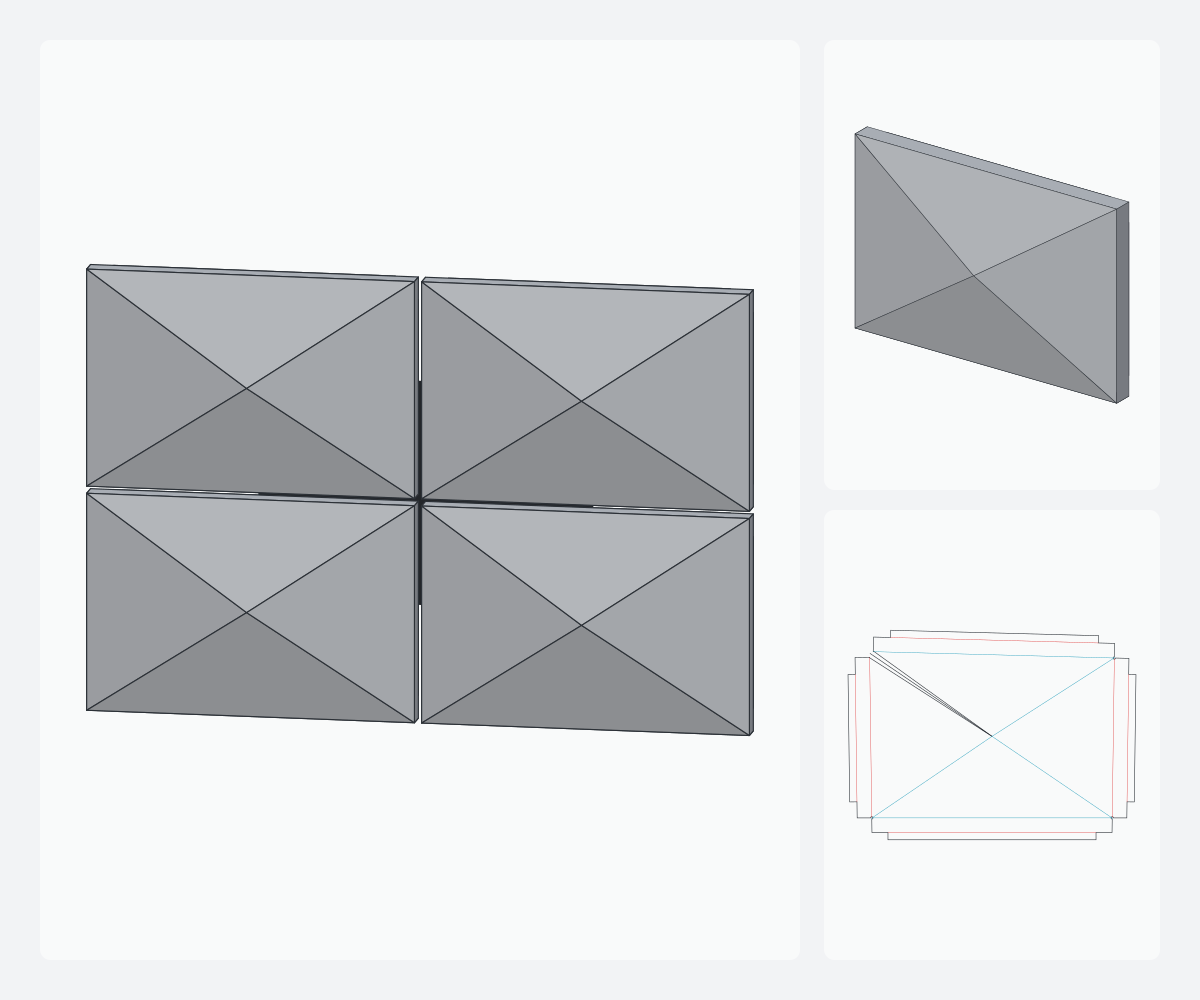
- mcpengineAn MCP server to drive the generator from an assistantSix tools on /api/mcp — list_families, describe_family, build_panel, export_dxf, nest_panels, calibrate_deduction — so an assistant can quote a façade, read the diagnostics and fetch the DXF without opening the studio. One line to attach it to Claude Code.
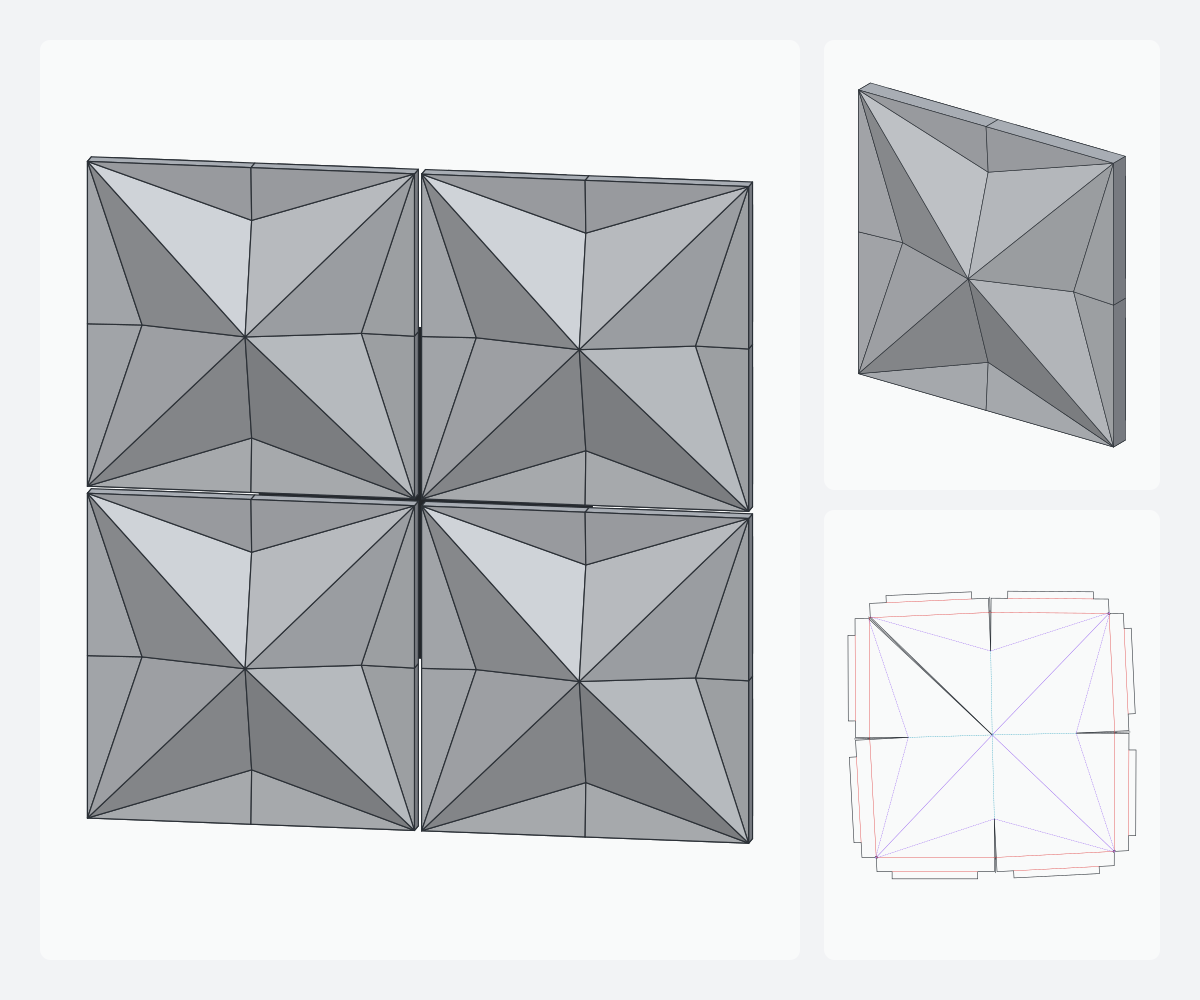
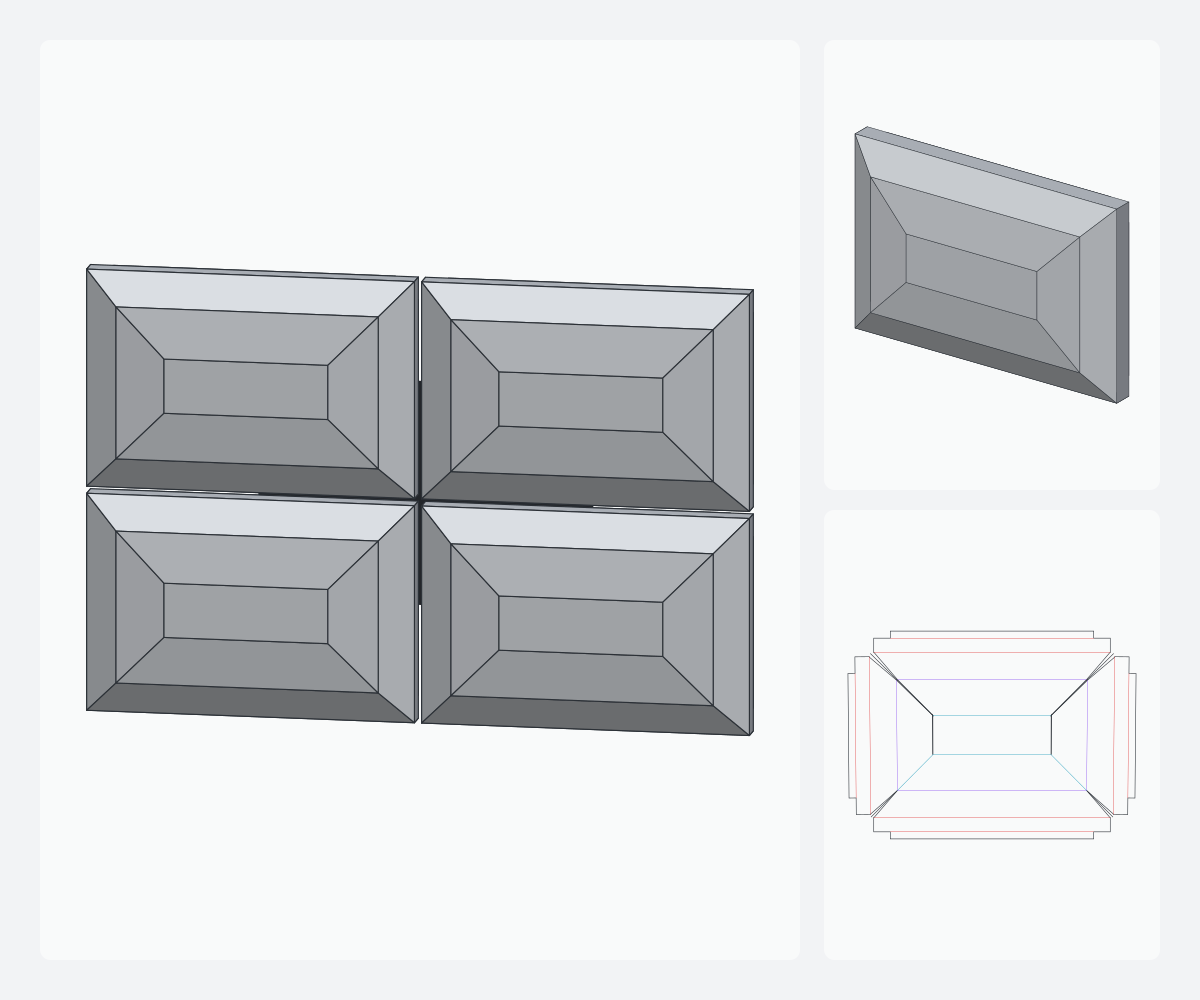
- familiesengineFive new families: twin diamond, chevron, eight facets, hexagonal plateau, mansard pyramidFamilies 35 to 39 join the catalogue. What each one does, how many slits it needs, and why the stepped pyramid with a flat landing we wanted at first will never exist: its corners are saddles.
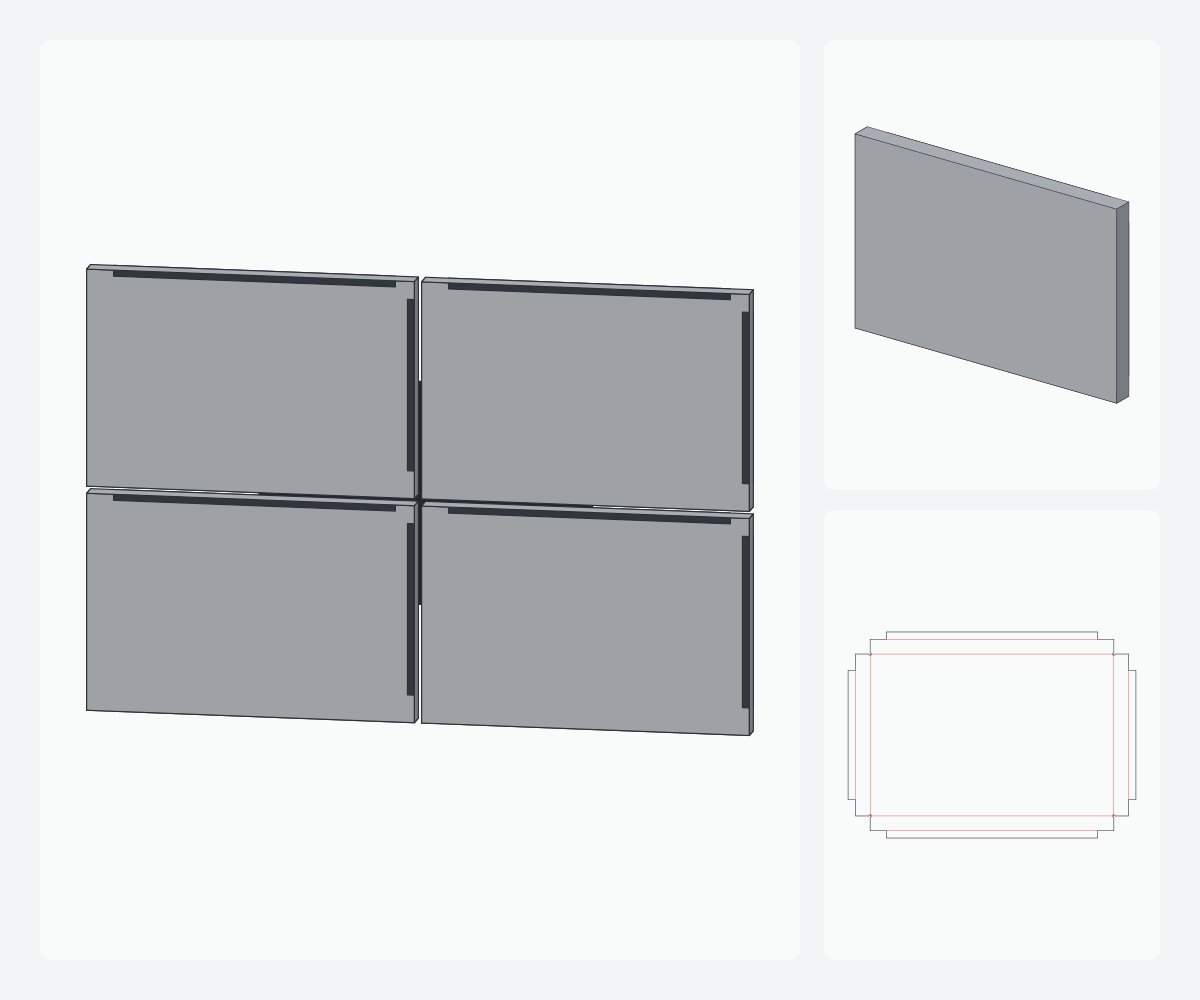
- wall layoutworkshopWall layouts: rotating, shifting and mirroring cassettes to read the façade patternA sloped cassette cannot be judged alone. The studio lays a 2 × 2 or 3 × 3 wall with 12 mm joints, seven laying patterns, and cassette-by-cassette edits — counting mirrored parts separately, because they are other parts.
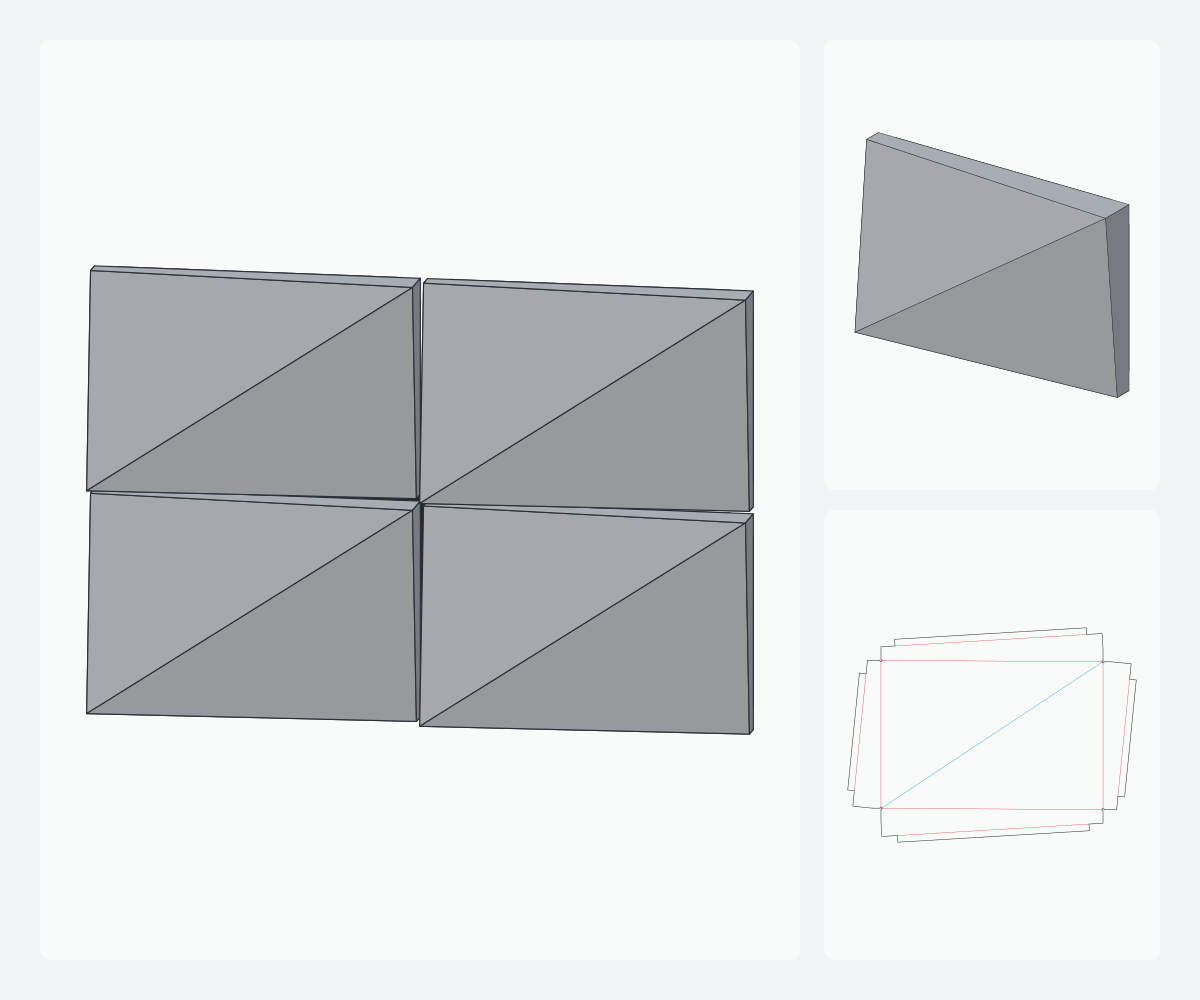
- engineWhat the engine refuses to export, and why that is good newsFour faults that used to come off the machine before we saw them — colliding tabs, a drill in a groove, overlapping faces, a missing cutter — and the codes the engine now emits instead: ASSEMBLY_OVERLAP, DRILL_IN_GROOVE, FACE_OVERLAP, CUTTER_UNAVAILABLE.
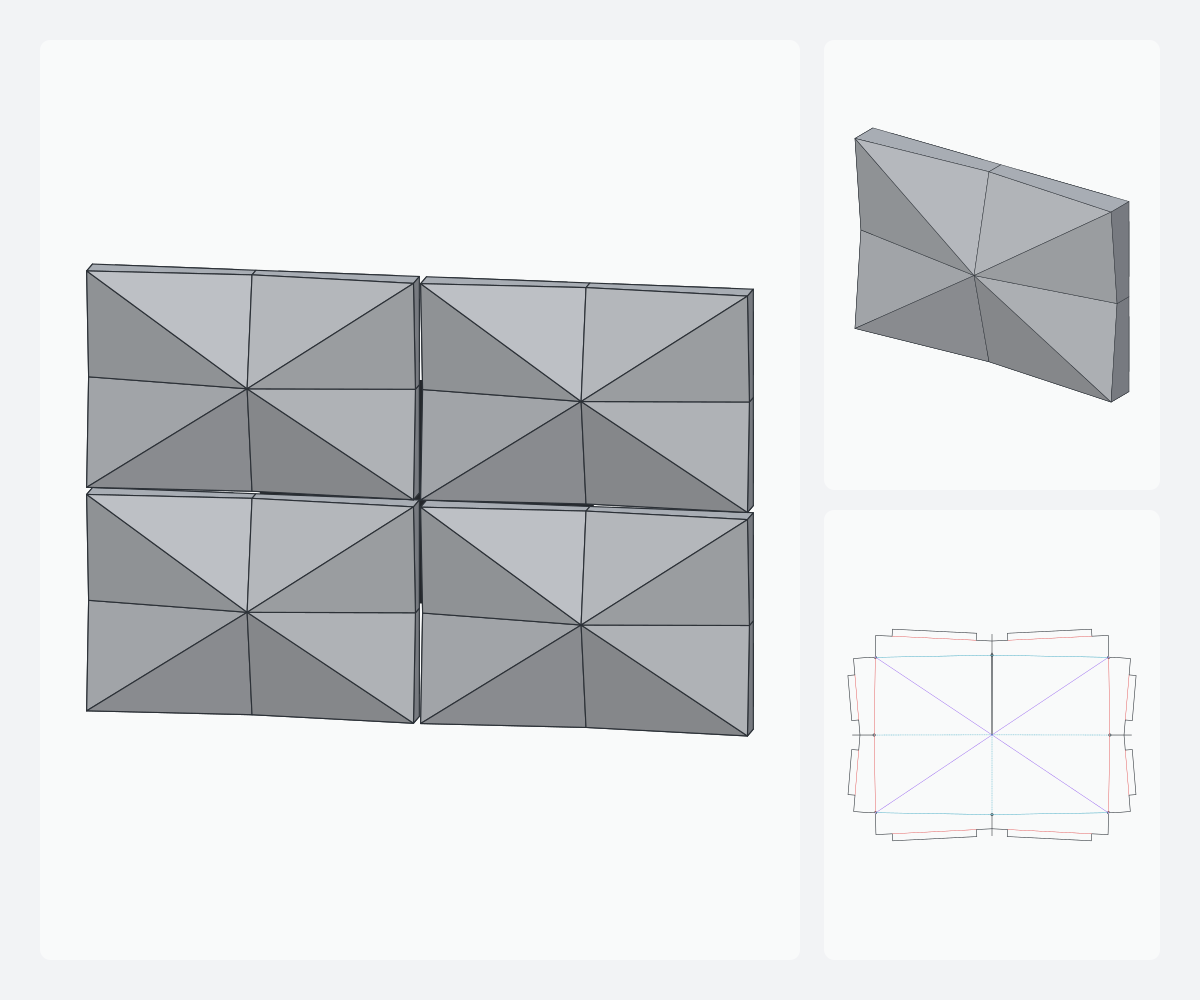
- calibrationworkshopCalibrating the bend deduction with a three-fold coupon“Deduction = thickness” is only a default. One strip, three folds at the same angle, a caliper, a subtraction: the real deduction of your cutter on your sheet, in a single try.
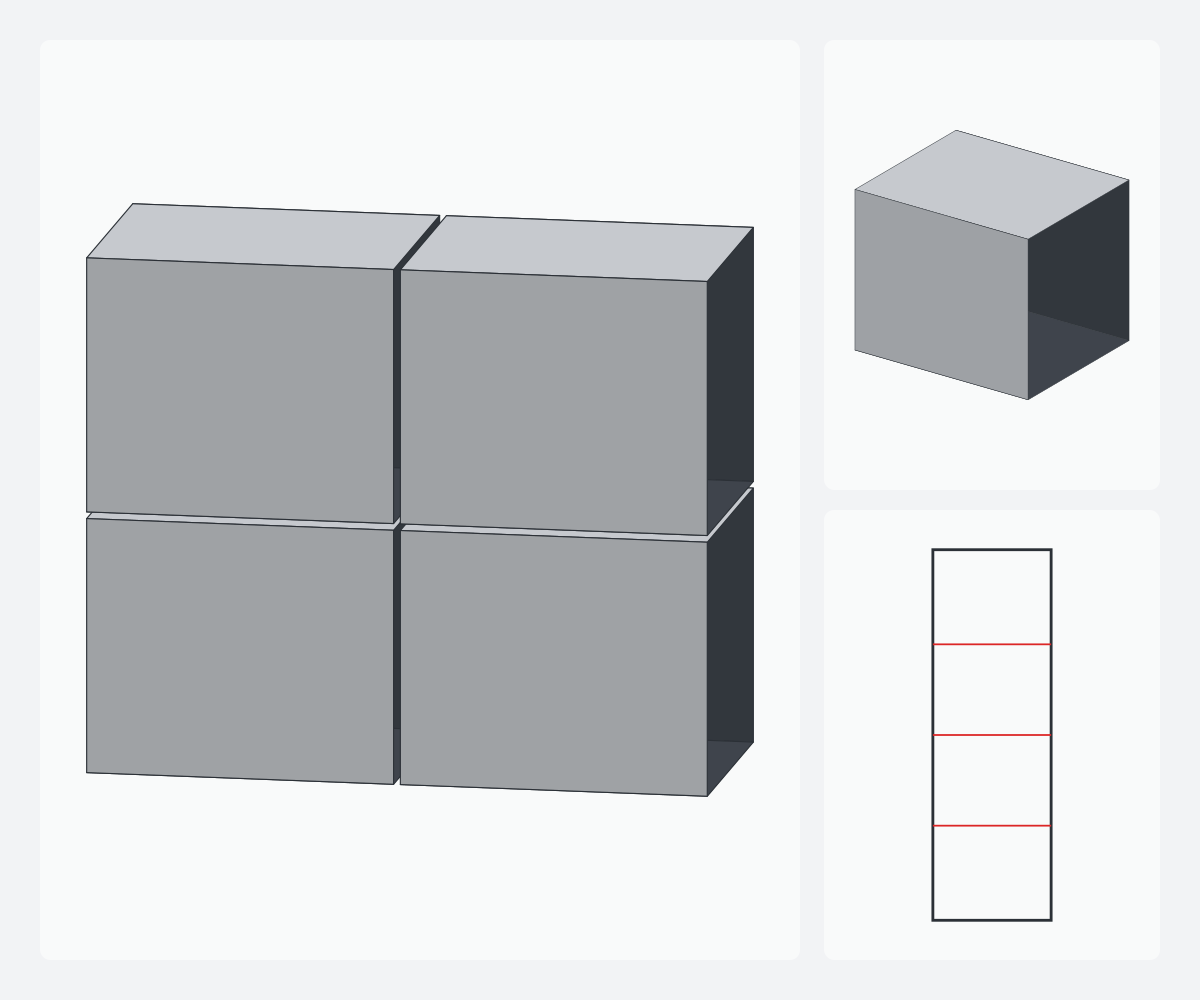
- workshopWhy we wrote an ACM cassette generator instead of drawing every DXFThree sheets lost on the same pyramid, a hand unfolding that changes with every quote, and 32 reference cassettes that all look alike: that is where the tool comes from.